
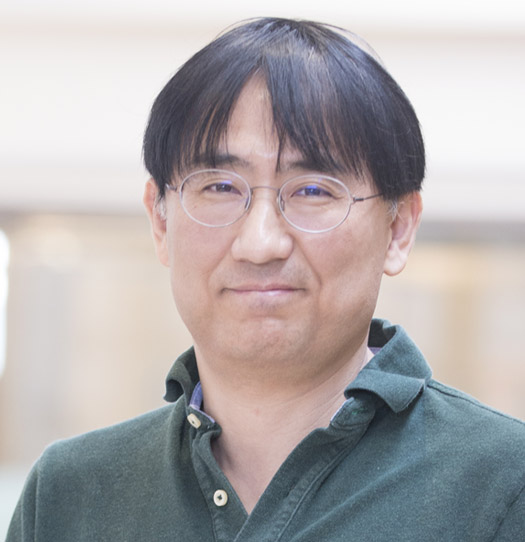
Il-Min Kim received his B.S. degree in Electronics Engineering from Yonsei University, Seoul, Korea, in 1996, and his M.S. and Ph.D. degrees in Electrical Engineering from the Korea Advanced Institute of Science and Technology (KAIST), Taejon, Korea, in 1998 and 2001, respectively.
From July 1997 to August 2001, he worked as a Part-Time Engineer at the Electronics and Telecommunications Research Institute (ETRI). He then worked as a Postdoctoral Research Fellow in the Department of Electrical Engineering and Computer Sciences (EECS) at the Massachusetts Institute of Technology (MIT) from October 2001 to August 2002 and in the Department of Electrical Engineering at Harvard University from September 2002 to June 2003.
In July 2003, he joined the Department of Electrical and Computer Engineering (ECE) at Queen’s University, Kingston, Canada, as an Assistant Professor. He was promoted to Associate Professor in 2009 and Full Professor in 2014. He is currently serving as Head of the ECE Department. He was Chair of the Undergraduate Program (for Electrical Engineering) from July 2022 to June 2025 and was Chair of the Graduate Program (i.e., Graduate Coordinator) from July 2012 to June 2015.
He is currently Director of Ubiquitous Artificial Intelligence Laboratory (UAI lab), a core faculty member of Ingenuity Labs Research Institute, and a faculty member of Queen's Centre for Security & Privacy. He is cross-appointed as an Adjunct Professor in the School of Electrical Engineering and Computer Science (EECS) at the University of Ottawa, and holds a Status-Only Professorship in the Department of Mechanical & Industrial Engineering at the University of Toronto.
His research focuses on artificial intelligence (AI), including agentic AI, physical AI, ubiquitous AI, edge AI, on-device AI, safe AI, universal equity AI, AI governance, AI alignment with human values, foundation models, AI for healthcare applications, machine unlearning, data privacy in machine learning, federated learning, distributed learning, continual learning, diffusion models, out-of-distribution (OOD) detection, self-supervised learning, contrastive representation learning, AI for IoT/IoE/IIoT/Mobile Crowd Sensing (MCS), AI-driven 6G wireless systems, AI-driven vehicle-to-everything (V2X) communications, and Geoscience AI (Geo-AI).
He holds multiple patents, either issued or pending, in the U.S., Japan, Germany, and Korea. His awards include First Prize in the Dense Video Captioning Challenge at the CVsports Workshop of CVPR 2024, the President’s Award from the Korean Federation of Science and Technology Societies (KOFST) in 2021, Best Paper Award at UBICOMM 2014, the Best Young Alumnus Award from KAIST in 2004, the Gold Prize in the 2001 Samsung International Paper Contest, and the Bronze Prize in the 1999 IEEE-Korea Section Paper Contest. At Queen’s University, he has received seven ECE Best Professor Awards (2025, 2024, 2016, 2011, 2008, 2006, and 2005).
He has served as an Editor for IEEE Transactions on Wireless Communications, IEEE Wireless Communications Letters, and the Journal of Communications and Networks (JCN).
He is a Senior Member of IEEE and a registered Professional Engineer with Professional Engineers Ontario (PEO). In 2008, he served as Vice-Chair, Programme, for the IEEE Kingston Section.
Research Interests
For more information about Dr. Kim's research, visit the Ubiquitous Artificial Intelligence Lab (UAI Lab) page. You can also explore the Ingenuity Labs Research Institute and Queen's Centre for Security & Privacy.
Join Our Lab
We are recruiting fully funded PhD students as well as post-doctral research fellows to work on cutting-edge AI topics. Competitive candidates with strong programming and theoretical/mathematical backgrounds are encouraged to apply. Please contact ilmin.kim@queensu.ca with your CV, transcripts, and English score reports (international PhD applications only).
Undergraduate Teaching
Graduate Teaching
Teaching Awards (by student vote)
To view Dr. Kim's publications, please visit the Ubiquitous Artificial Intelligence lab (UAI lab) page.