My research projects help to address the following UN Sustainable Development Goals:
I am a faculty member in the Department of Civil Engineering with a background in environmental and geological engineering. My expertise is in fractured rock hydrogeology, cryo-hydrogeology, and environmental/isotope tracers. The goal of my research is to support safe and sustainable groundwater resources in cold regions under climate change through field-based investigations combined with robust statistical and numerical analyses. My work aims to improve the ability of governments, industry, and First Nations to effectively respond to a rapidly warming climate. I am also an Associate Editor for Hydrogeology Journal and have been on the board of a non-profit organization focused on watershed conservation and outreach since 2017.
I was previously an NSERC Postdoctoral Fellow at Wilfrid Laurier University (2021 – 2022) where I studied the impacts of permafrost thaw on groundwater and surface water integration at the Scotty Creek Research Station. I completed my PhD in Civil Engineering (2016 – 2021) and BASc in Geological Engineering (2012 – 2016) at Queen’s University, Canada.
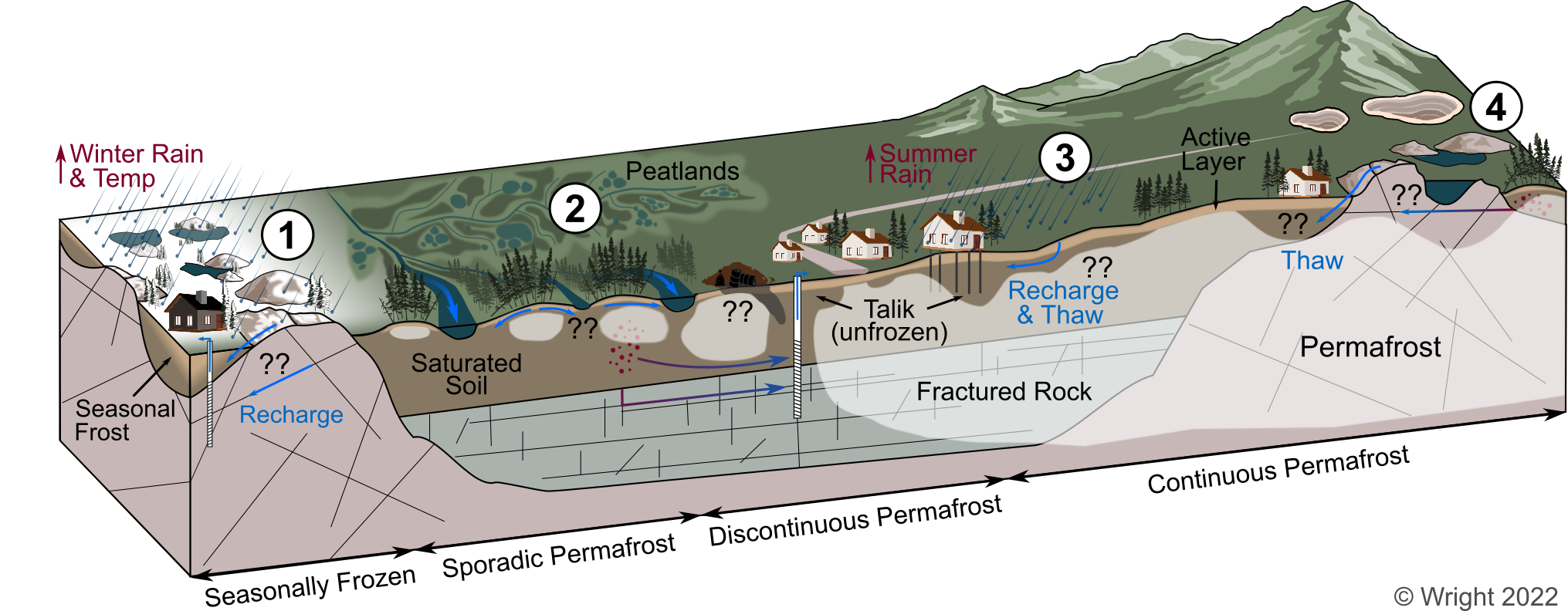
Rising temperatures from climate change are severely impacting the global cryosphere with direct implications for vital groundwater resources. In seasonally frozen environments, changing winter conditions affect sensitive groundwater resources that are recharged by winter precipitation. In the Circumpolar North, rapid warming is leading to unprecedented permafrost thaw, which is impacting freshwater quality and quantity, damaging critical infrastructure, increasing greenhouse gas emissions, and negatively impacting northern livelihoods. These issues will likely intensify over the coming decades, highlighting the urgent need to understand the processes and trajectory of hydrologic change driven by climate change and permafrost thaw.
The goal of our research is to support safe and sustainable groundwater resources in cold regions under climate change. We conduct process-based field and numerical modelling investigations to understand the impacts of climate change and permafrost thaw on groundwater resources. This work aims to improve predictions of hydrologic change under future climate scenarios and build the capacity of governments, First Nations, and industry to effectively mitigate and adapt to the consequences of a warming world. We take an integrated approach by investigating dynamically coupled systems and incorporate community concerns and Traditional Knowledge into the planning, collection, and interpretation of results. Our research spans cold regions across Canada from seasonally frozen bedrock aquifers in southern Canada, to the permafrost beneath peatlands, tundra, and fractured rock of the Canadian Arctic and sub-Arctic. Some examples of areas we research are highlighted below.
|
|
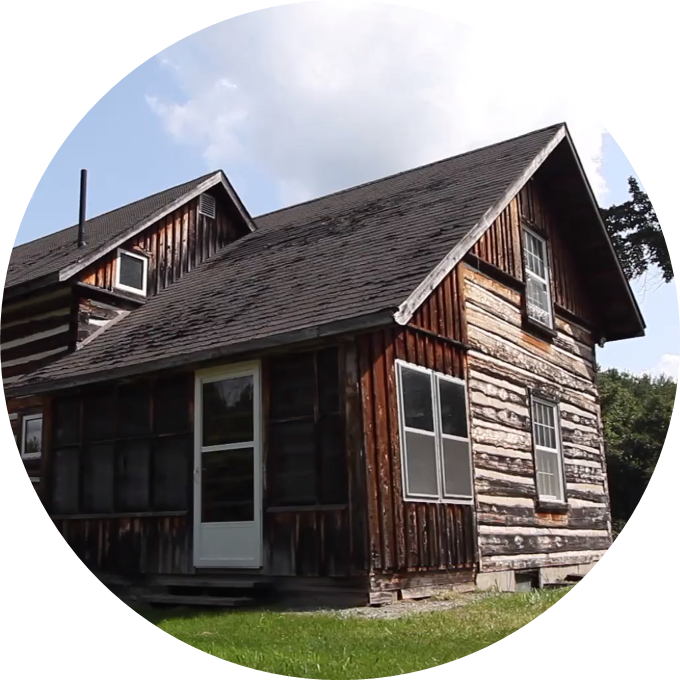
Nearest Community: Tamworth, Ontario Ongoing Research:
|
|
|
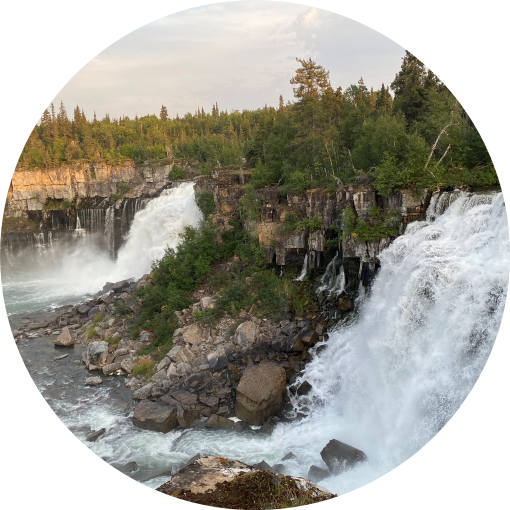
Nearest Community: Whatì, Northwest Territories Ongoing Research:
|
|
|
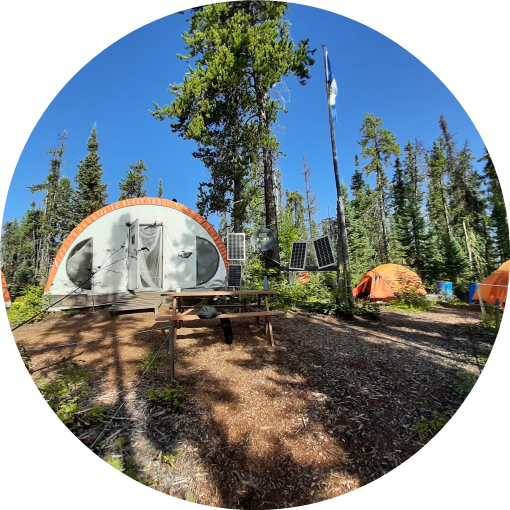
Nearest Community: Fort Simpson, Northwest Territories Ongoing Research:
|
|
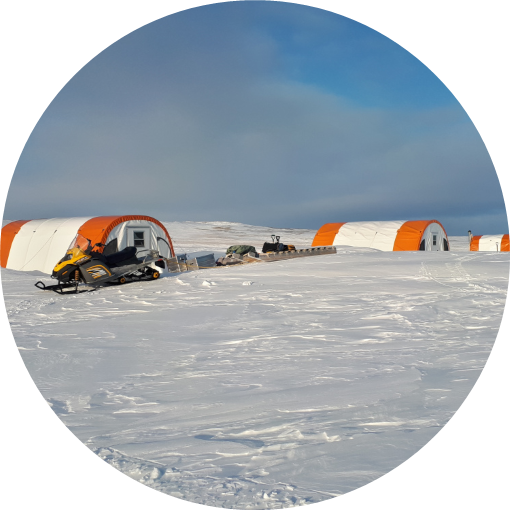
Cape Bounty Arctic Watershed Observatory
|
Nearest Community: Resolute Bay, Nunavut Ongoing Research:
|
CIVL 200: Professional Skills I (2020, 2024, 2025)
CIVL 371: Groundwater Engineering (2023-2025)
CIVL 888: Theory of Groundwater Flow and Transport (2026)
Click below for a complete update-to-date list of publications:
Select Publications
|
2025-2028 |
NWT Streams and Rivers of the future: How permafrost thaw and groundwater activation are changing water resources (PI), Government of the Northwest Territories (GNWT), Cumulative Impacts Monitoring Program (CIMP) |
|
2025-2028 |
Fire, Fish, Lakes, and Landscapes: The impact of climate on aquatic ecosystems in Tlicho lands (Co-PI), Weston Family Foundation’s Northern Biodiversity Research Program |
|
2024-2027 |
Climate change, dewatering in Ni’iinlii Njik, and Porcupine River chum salmon (Co-PI), CIRNAC – Indigenous Community Based Climate Monitoring Program |
|
2024-2029 |
The Fractured Rock and Cryo-Hydrogeology Laboratory (PI), Canada Foundation for Innovation (CFI) John R. Evans Leaders Fund |
|
2024-2029 |
Advancing Fractured Rock Cryo-Hydrogeology Under Climate Change (PI), NSERC Discovery, Northern Research Supplement, and Discovery Launch Supplement |
|
2024-2027 |
Impact of climate change and permafrost thaw on groundwater vulnerability in northern communities (PI), NSERC Alliance Advantage & GNWT |
|
2024-2027 |
Impacts of climate change and permafrost thaw on the Whatì community well: A groundwater vulnerability assessment (PI), CIRNAC – Climate Change Preparedness in the North |
|
2023-2026 |
The Role of Petroleum Hydrocarbons and Salts in Intensifying Thaw and Contaminant Migration for Drilling-Mud Sumps in Warming Permafrost (Co-PI), Imperial Research Grant |
|
2022-2025 |
NWT Streams and Rivers of the future: How permafrost thaw and groundwater activation are changing water resources (PI), GNWT CIMP |
|
2021 |
NSERC Postdoctoral Fellow |
|
Abbi Baran, MASc |
Abbi is a Research and Field Technician co-supervised by Dr. Élise Devoie. Her experience conducting field work and community engagement in the Northwest Territories will support multi-disciplinary field projects in Whatì. Abbi also supports graduate and undergraduate student projects with her expertise in permafrost hydrological modelling and data analysis.
|
|
Rachel Lackey (PhD Candidate)
|
Rachel is a PhD student co-supervised by Dr. Jeffrey McKenzie at McGill University. Through field work and numerical modelling, she is exploring the impacts of climate change on groundwater vulnerability in discontinuous permafrost environments. She is working towards developing a greater understanding of how groundwater-permafrost thaw feedback occurs and its impact on communities and the greater northern ecosystem. |
|
Lydia Morrow (MASc Candidate) |
Lydia is an MASc student investigating the pre- and post-wildfire impacts to water quality (specifically mercury and methylmercury) in thawing permafrost peatlands in the southern Northwest Territories. Her study site is the Scotty Creek Research Station, which was impacted by wildfire in 2022 and is the first Indigenous-led research station in Canada. |
|
Manav Shah (MASc Candidate) |
Manav's masters project focuses on assessing the vulnerability of groundwater resources in the Whitehorse Copper Belt, Yukon. His project combines physical fractured rock characterization with environmental tracers to assess how historical mining and geogenic metal(loid) sources are impacting groundwater quality for downstream users. |
|
Olivia Locke (MASc Candidate) |
Olivia is a masters student who will be investing recharge and discharge dynamics in in a thawing discontinous permafrost watershed. She will use a combination of geophyscial field methods to study recharge in fractured rock outcrops as a mechanism for driving increased dischage in the La Martre River under climate warming. |
|
Brian Kessler (MASc Candidate) |
Brian's master's project works closely with the Vuntut Gwitchin First Nation to study seasonal dewatering in the Ni’iinlii Njik (Fishing Branch River), Yukon. He will use a variety of field methods including isotope tracers to study dewatering trends and permafrost-groundwater dynamics in this remote watershed in northern Yukon. Results have implications for critical Chum Salmon spawning habitat and will inform mitigation measures to protect this ecologically and culturally significant salmon population. |
|
Sofia Strantzas (MASc Candidate) |
Sofia is a masters student co-supervised by Dr. Cole Van De Ven at Carleton University. She will conduct freeze-thaw experiments to understand how salts and hydrocarbons are mobilized from thawing drilling mud sumps. Results will inform numerical simulations of contaminant release and transport under climate warming scenarios. |
|
Abbie Houlding Braunberger (BASc Student) |
Abbie is in her final year of the Civil Engineering program at Queen's. Her Undergraduate Thesis examines the changing seasonal patterns of water levels on the Ni’iinlii Njik (Fishing Branch River) using cameras, water levels and isotope tracers. Her work will improve our understanding of the timing and patterns of seasonal dewatering within the watershed to improve mitigation strategies for protecting salmon spawning habitat. |
|
Clara Iida (BASc Student) |
Clara is finishing her degree in Civil Engineering and completing an undergraduate thesis under the supervision of Dr. Wright. She is working with surface and subsurface data from northern stretches of the La Martre River watershed to improve the calibration of a hydrologic model. Her research will support improve our understanding of surface water - groundwater interactions in thawing permafrost catchments. |
Dr. Wright is actively seeking talented and driven students for fully funded masters and PhD projects on topics related to groundwater flow and contaminant transport in cold regions. All projects have varying degrees of field investigation and/or numerical modelling. Other topics related to cold regions groundwater resources are possible, so reach out if you have a project/topic in mind!
Applicants should have an undergraduate or masters degree in Civil, Environmental, or Geological Engineering, Earth and Environmental Sciences, Physical Geography, or related fields. Previous related field experience is an asset, but is not essential. Additionally, applicants for Northern field projects should be eager and interested in engaging with Indigenous communities and conducting field work in remote locations for extended periods (e.g., several weeks) at a time.
To apply, include a cover letter outlining your relevant experience and position(s) you are interested in, an updated CV, and unofficial transcripts. Please email your application to Dr. Wright (stephanie.wright@queenu.ca) with the subject line “Wright Research Opportunity”
Applications will continue to be accepted until a suitable candidate is found. Positions will be removed from this page as they are filled.