
Each year, the Royal Society of Canada (RSC), one of the country’s most prestigious academic institutions, recognizes Canadian researchers for their contributions across the arts and humanities, social sciences, and sciences.
This year, three Queen’s researchers have earned this honour for their outstanding work in civil engineering, international security, and molecular dynamics. Amir Fam (Civil Engineering) has been elected as a Fellow of the RSC and Stéfanie von Hlatky (Political Studies) will join the College of New Scholars, Artists, and Scientists, while Tucker Carrington (Chemistry) has been awarded the Henry Marshall Tory Medal.
These recognitions highlight their research impact and national leadership in their fields.
“Election to the Royal Society of Canada is among our country’s highest research honours,” says Nancy Ross, Vice-Principal (Research). “Congratulations to Drs. Fam, von Hlatky, and Carrington on recognition of their national leadership. Queen’s is proud to provide the conditions that enable transformational research with meaningful impact for Canadians and the world.”
Established in 1882, the RSC is Canada’s national academy, dedicated to promoting research and learning, recognizing academic and artistic excellence, and advising governments, non-governmental organizations, and Canadians on important matters. Its mission is to serve Canada by recognizing Canada’s leading scholars, researchers, and artists, empowering them to address issues that are critical to Canadians.
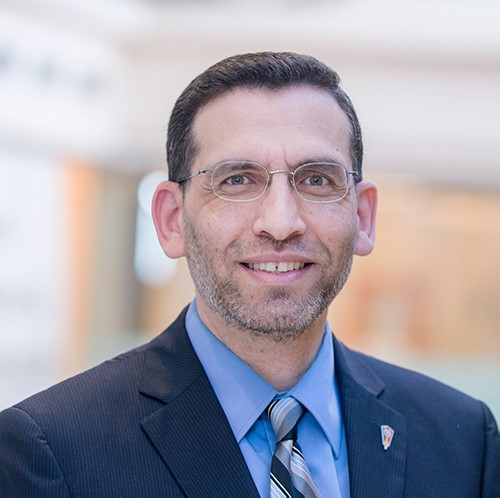
A Fellow of the Royal Society of Canada, Amir Fam is a Professor in the department of Civil Engineering, Vice-Dean (Research) at Smith Engineering and the Canada Research Chair in Climate Change Resilient Infrastructure. A leading expert in structural engineering, Fam’s research focuses on sustainable construction methods using fiber-reinforced polymer (FRP) and bio-based composite and ultra-high performance concrete materials to strengthen and retrofit aging infrastructure as well as developing energy-efficient buildings.
His research innovations, such as the use of stay-in-place FRP tubes, bars, or carbon-FRP prestressing cables, to eliminate steel corrosion in concrete, have revolutionized bridge construction across North America. His work has been applied in first-of-their-kind structures such as the Taylor Bridge in Manitoba, the Bombardier Transportation monorail test track in Ontario, and the Route 40 Bridge in Virginia.
Over the course of his career, Fam has supervised and trained more than 85 graduate and postdoctoral researchers. He has authored over 240 peer-reviewed journal articles and secured more than $15 million in research funding. His work has directly shaped engineering codes and guidelines used across Canada and the U.S., and his design and development for Canada’s first Rolling Load Simulator has helped engineers better assess bridge fatigue and performance.
“The Royal Society of Canada is delighted to welcome into its ranks a talented group of inspiring researchers, artists, and creators whose peers have recognized their exceptional contributions to the world of science and culture, as well as to the wellbeing of Canadians,” says Alain-G. Gagnon, FRSC, President of the RSC. “Their research will continue to influence public policy for years to come, while improving the wellbeing of our society."
The RSC comprises three academies—the Academy of Arts and Humanities, Academy of Social Sciences, and Academy of Science—as well as the College of New Scholars, Artists, and Scientists, which was established in 2014. Fellows of the RSC are elected by their peers for outstanding career-long contributions, while College Members are early to mid-career scholars who have demonstrated exceptional accomplishments within 15 years of completing their doctorate. Since 1964, Queen’s has had 123 faculty members elected as Fellows and 22 inducted into the College of New Scholars, Artists, and Scientists.
This article is adapted from the original in the Queen’s Gazette, written by Evangelyn “EJ” Kelvin, Communications and Strategic Initiatives Intern, which features details regarding the recognition of Stéfanie von Hlatky, Tucker Carrington, and the Justice Rosalie Silberman Abella Prize honoree, Sierra Jones-McLeod.