
What if you could address topics like consent in a way that engages students’ problem-solving skills?
That’s the thinking behind a new, first-of-its-kind workshop that tackles sexual violence prevention as a design challenge.
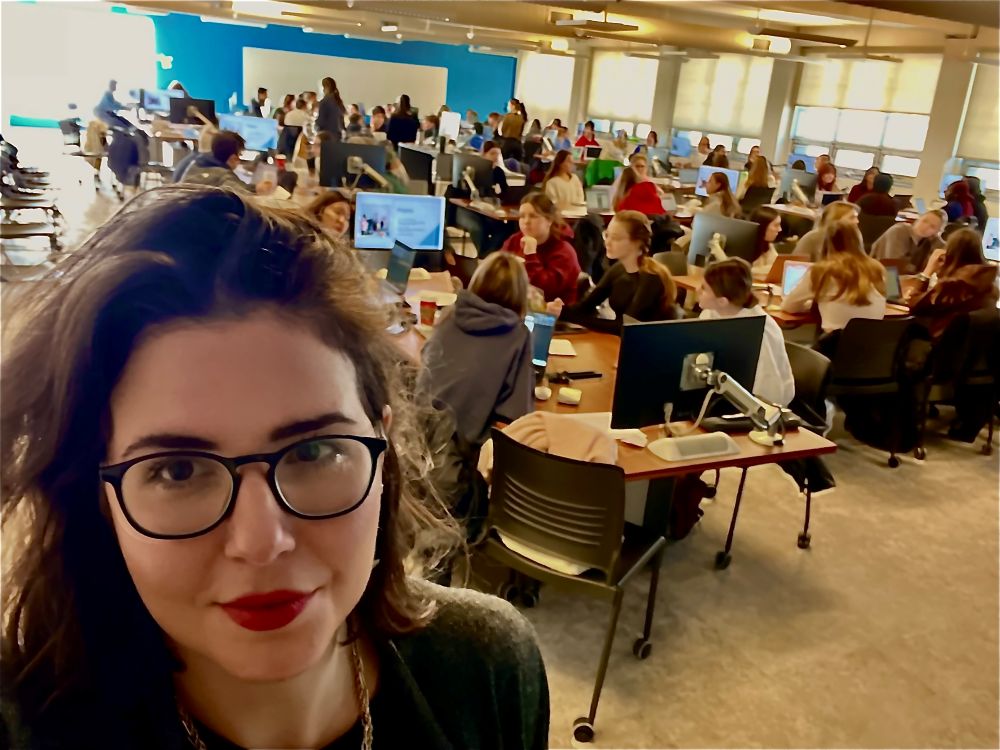
The new workshop-style course will be delivered to every second-year engineering student beginning this academic year. Rather than offering a one-off lecture or optional seminar, the program is embedded within existing design courses.
The course was developed by Rebecca Rappeport, the Sexual Violence Prevention & Response Community Outreach and Student Support Worker at Queen’s.
“Traditional workshops reach the students who are already bought in,” Rappeport says. “We needed a model that engages those who might think this isn’t their issue, or that sexual violence isn’t a big problem. By treating consent as a design challenge, we meet engineering students where they are.”
The course, called InnovateEd Design: Where Education Meets Empowerment, grew out of years of campus-wide prevention efforts. Rappeport, who joined Queen’s three years ago, has led workshops around healthy relationships, consent and responding to disclosures for both students and employees, healthy relationships workshops, and annual Consent Week events. While those programs remain vital, voluntary sessions often draw small, self-selecting audiences.
“I can do great workshops, and the four people who attend really like it,” she says. “But where do we actually engage the broader student body?”
The answer emerged through collaboration with engineering faculty members Joshua Marshall, Heidi Ploeg, and others, in addition to support from Dean Kevin Deluzio. Rappeport first piloted the idea in a robotics and technology class, presenting sexual violence as a “wicked problem” — a complex societal issue shaped by colonialism, racism, homophobia, and power imbalances. Students were challenged to develop practical interventions using design thinking and a socio-ecological model.
The results exceeded her expectations. “Students came up with innovative, localized solutions that I hadn’t thought of,” Rappeport says.
Surveys revealed that more than 90 percent found the exercise relevant to their studies. Some students lingered after class to continue the discussion while others launched new campus initiatives. “Women in the class told me they felt seen and heard. Their peers were finally taking this seriously,” she says.
From those promising initial results, Rappeport expanded the workshop into additional courses and departments, gathering data to demonstrate its impact. The program is now being scaled across the entire second-year engineering cohort, with plans to extend it to third- and fourth-year courses. Similar sessions are being piloted in Commerce, Kinesiology, and Health Sciences.
The workshop also resonates beyond engineering. Mining students, for example, will explore the documented links between resource extraction industries and sexual violence in Indigenous communities. Writing students will examine how language can either reinforce or challenge harmful norms. “We need civil engineers, designers, and future leaders to see themselves as part of the solution,” Rappeport says.
The timing of the rollout aligns with Queen’s annual Consent Week, a national campaign that highlights the urgency of sexual violence prevention during the high-risk “red zone” of the academic year’s first two months. Although Rappeport’s initiative is separate from Consent Week programming, both reflect a growing recognition that cultural change requires sustained, systemic education.
“Sexual violence is the only violent crime in Canada that hasn’t decreased in the last decade,” she says. “We can’t solve it through the justice system alone. We need to design better systems and, since engineers are natural problem-solvers, let’s give them the tools to tackle one of society’s most pressing problems.”