
Indigenous Futures in Engineering is advancing inclusive STEM education through a growing partnership with Connected North, a national virtual learning initiative that connects remote Indigenous communities with interactive enrichment opportunities. Together, the programs are delivering live STEM workshops led by First Nations and Métis undergraduate science and engineering students at Queen’s University, bringing both technical knowledge and powerful role models into classrooms across the North.
Connected North uses a two-way, high-definition virtual delivery model that allows students in remote communities to engage in real time with facilitators, ask questions, and participate in hands-on learning without leaving their classrooms. Sessions are scheduled in collaboration with teachers and tailored to curricular goals, while centering Indigenous ways of knowing, storytelling, and relationship-building. The model emphasizes connection as much as content, creating meaningful interactions between learners and instructors.
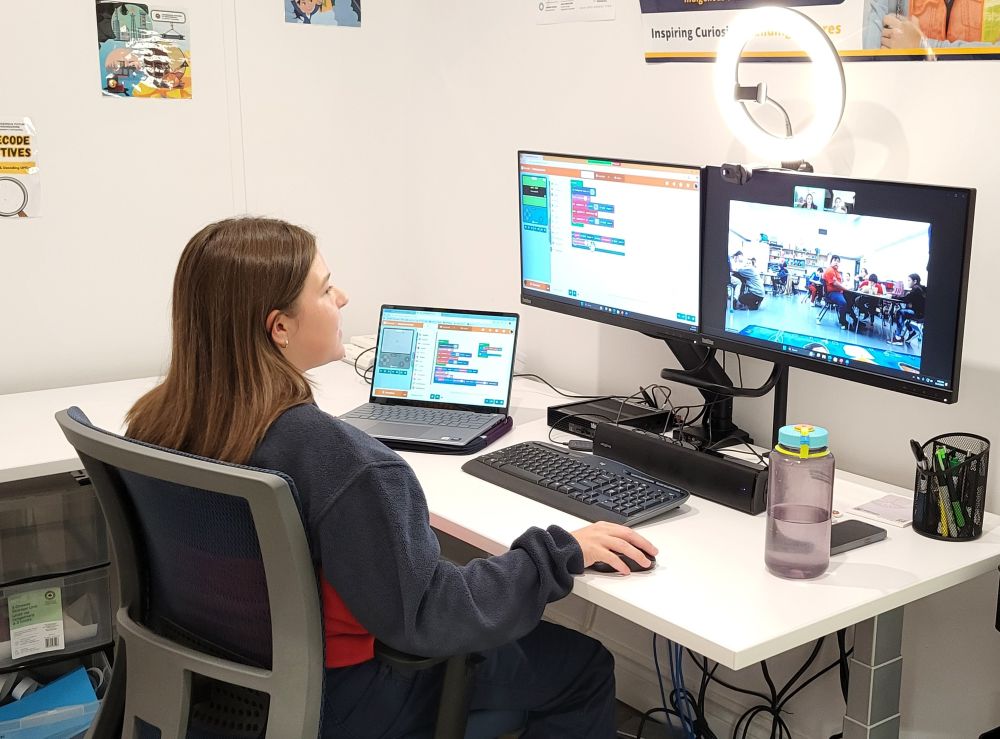
Emma Triskle at work in the InEng Studio, delivering her coding workshop based on life science concepts to youth in Canada’s north through the Connected North platform.
Last year, Indigenous Futures in Engineering piloted a new delivery approach within this model, delivered by program staff. The demand was overwhelming, so in response the initiative hired seven Indigenous undergraduate student instructors to design and deliver STEM workshops for the current academic year. Rather than using standardized lesson plans, students developed workshops based on their own academic disciplines and personal interests then worked with the educators on staff to ensure age-appropriate content and pacing, resulting in sessions that are engaging and deeply relevant.
For Melanie Howard, Director of Indigenous Futures in Engineering, the impact is clear. “This partnership is a win-win,” she says. “Communities receive meaningful STEM outreach, and our students gain leadership experience, confidence, and a chance to give back. It’s relationship-driven learning at its best.”
“Having Indigenous undergraduate students step into instructor roles is incredibly powerful,” says Jayson Moore, Educator Engagement and School Support Manager with Connected North, echoing the value of the partnership with Indigenous Futures in Engineering. “They bring lived experience and inspiration that youth immediately connect with.”
To support delivery from Kingston, a studio was set up in Smith Engineering office space that provides an overhead camera, professional lighting, and multiple screens to facilitate seamless delivery of workshops.
The workshops continue to be especially popular, in part because the STEM content is delivered by Queen’s undergraduate students who are positive and relatable role models. Younger learners in northern communities are often just as curious about the instructors themselves as the subject matter. To respond to this, presentations intentionally include a personal slide where instructors share who they are, where they come from, and why they chose their field of study. This helps younger learners see themselves reflected in future STEM pathways.
“The relationships go both ways,” said Emma Triskle, a Concurrent Education student majoring in Biology and a member of Red Rock Indian Band, whose extended family lives in Northern Ontario. “Connecting with students from communities like my own reminds me why representation matters. Being able to share my story while learning from theirs has strengthened my confidence and my commitment to education.”
Commenting on the growth of the initiative, Smith Engineering Dean Kevin Deluzio sees promise in the future. “Our students are the heart of Smith Engineering, and to see Indigenous students able to contribute back to their communities while living and studying in Kingston is fantastic. We need young scientists and engineers from all walks of life – this initiative can excite youth in northern communities about the possibilities in STEM and the path forward.”
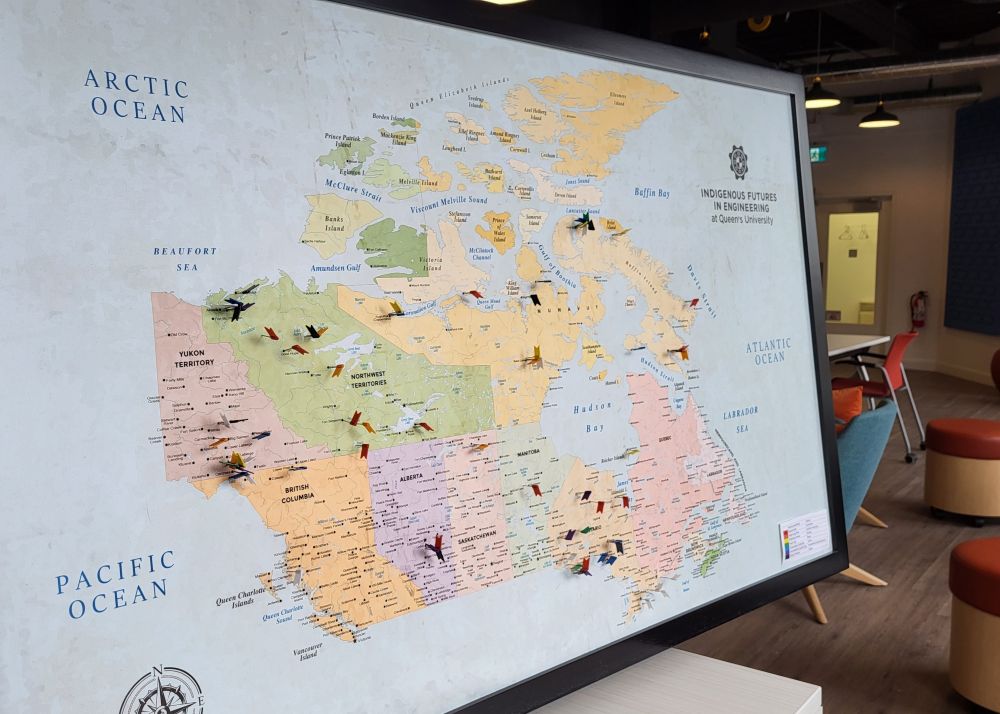
So far this academic year, over 100 workshops have been delivered across 62 schools in northern Canada. To make the program’s reach and impact visible, Indigenous Futures in Engineering invested in a large map featuring coloured pins that mark workshop locations. Displayed in the common space at Smith Engineering’s Princess St. office, the map serves as a conversation piece, enabling student instructors to share and discuss their work with peers.