For Mojtaba Forouzesh, PhD’24, his rapidly advancing career in power electronics is more than an opportunity to work in a field that fascinates him. It’s about optimizing power conversion and control in electric systems, while collaborating with some of the world’s greatest minds to find ways to accelerate positive change.
“Power electronics is essential to solving global energy challenges,” Forouzesh says. “In my case, examining how we produce consistent energy from renewable sources was my earlier concern, while my PhD research shifted more toward electric vehicle systems, both aimed at power conversion in the most efficient way possible with minimal waste.”
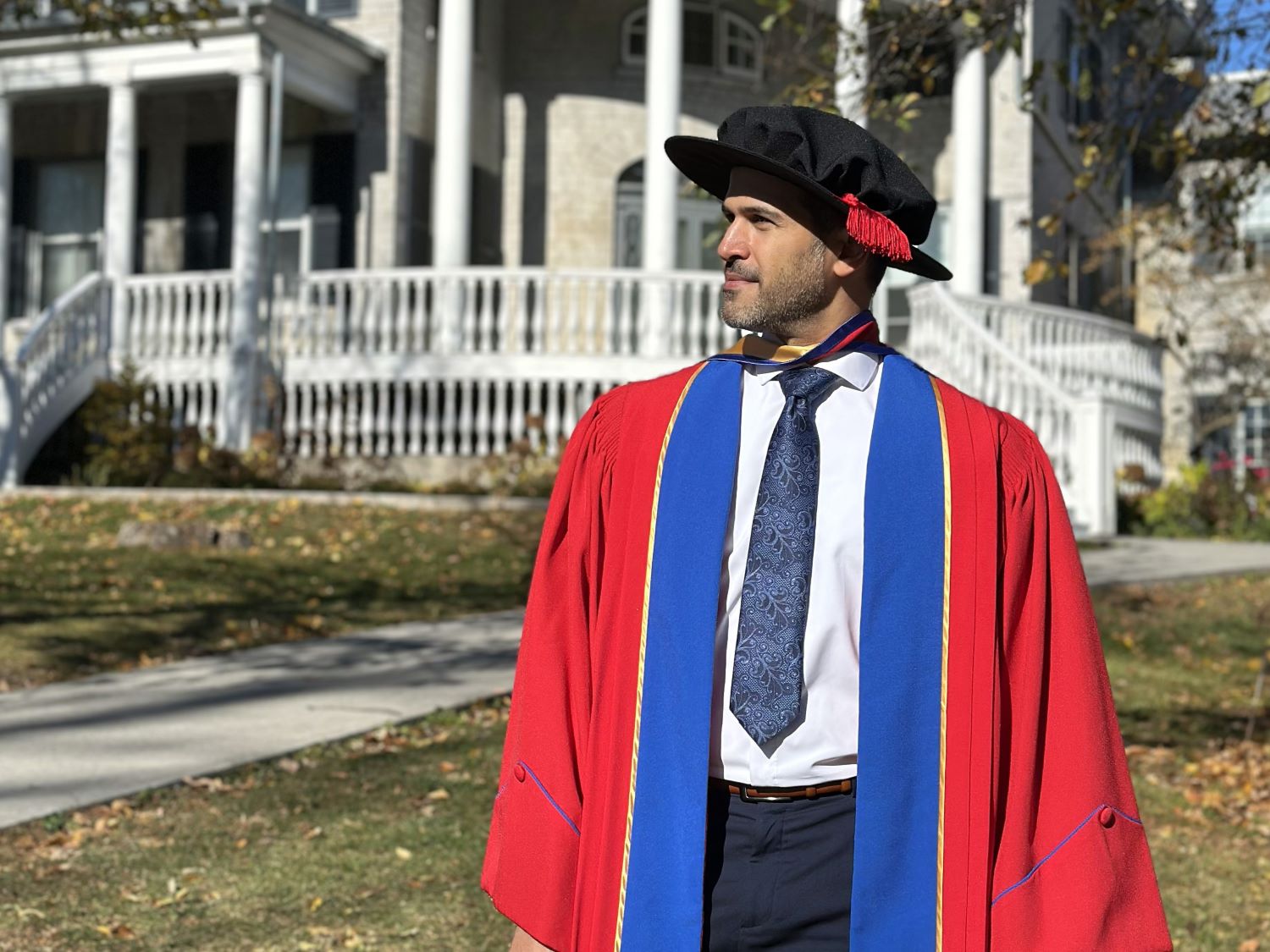
A recent PhD graduate of the Department of Electrical and Computer Engineering under Yan-Fei Liu, Forouzesh became involved in an industry-sponsored project with Magna’s R&D team during his doctoral studies, an experience that ultimately led to his current role as Senior Engineer, Power Electronics Design, at Magna Powertrain.
“In the first phase of my PhD research, we explored a phase modular, single-stage approach to three-phase AC-DC power conversion,” Forouzesh explains. “Conventional systems typically use a two-stage conversion, first producing a relatively fixed high-voltage DC link, followed by an isolated DC-DC converter to meet grid and load demands. Our approach was direct power conversion from AC to DC via a high frequency isolation transformer in a single-stage design with over 98% efficiency.”
“In the second phase of my PhD, I was with Dr. Liu at Smith Engineering and worked on a Magna-sponsored project focused on developing a high efficiency DC-DC converter,” he continues. “This converter was designed to function as the alternator equivalent in electric vehicles, with enhanced redundancy to meet maximum functional safety requirements of autonomous driving systems.”
“All in all, the goal was to increase the driving range and reduce the charging time, while enhancing the reliability of electric vehicles to help their broad adoption and their mobility.”
The work with Magna was successful to the point that a job was waiting for Forouzesh prior to graduation. “Now, at Magna, I get to collaborate with different universities, professors and students. I get to lead innovative projects with these universities. My group is Advanced Engineering, which works on the future products and technologies that will eventually be integrated into electric vehicles. Research and development collaboration is something that can shift continuously, driven by the economy and demand.”
Collaboration was key to Forouzesh’s doctoral work at Smith Engineering, and even his decision to work with Liu. “Seeing how Yan-Fei presented his group online, not only a website about what the group is and does, but also with a page dedicated to his alumni and where they are now, meant a lot, as well as his inspiring commitment to creating efficient power conversion,” Forouzesh says. “Working with him and the lab was very interactive, very collaborative, with Yan-Fei setting people on the right track to move forward autonomously as he helped others.”
Work in the power electronics community has provided many such opportunities for collaboration and career growth. The Institute of Electrical and Electronics Engineers (IEEE), a professional organization where Forouzesh is now a Senior Member, “has specific, field-related groups, such as the Power Electric Society, which I am a part of. These societies are communities, and close ones. Through conferences, you can meet the authors of research papers and industry professionals and find potential collaborators.”
One of Forouzesh’s way of giving back to the community is through reviewing papers, and he has been honored with awards as an Outstanding Reviewer, and later as a Distinguished Reviewer in 2019 by two leading IEEE transactions journals in power electronics. This was followed by an invitation to the prestigious Lindau Nobel Laureate Meeting in 2020, held online for the first time ever, due to COVID, and the later distinction of a very rare second invitation to the Meeting in 2024.
“This is very rare for anyone who isn’t a Nobel laureate,” Forouzesh says. The Meetings are “true networking events,” which allow attendees to meet and talk to Nobel prize-winners, government leaders, captains of industry and other invitees, all leading thinkers in their respective areas. One of Forouzesh’s takeaways from these meetings was the need to stay abreast of work beyond his immediate interests. “I dedicate time every day to reading about areas related to whatever challenge I am working on,” he says.
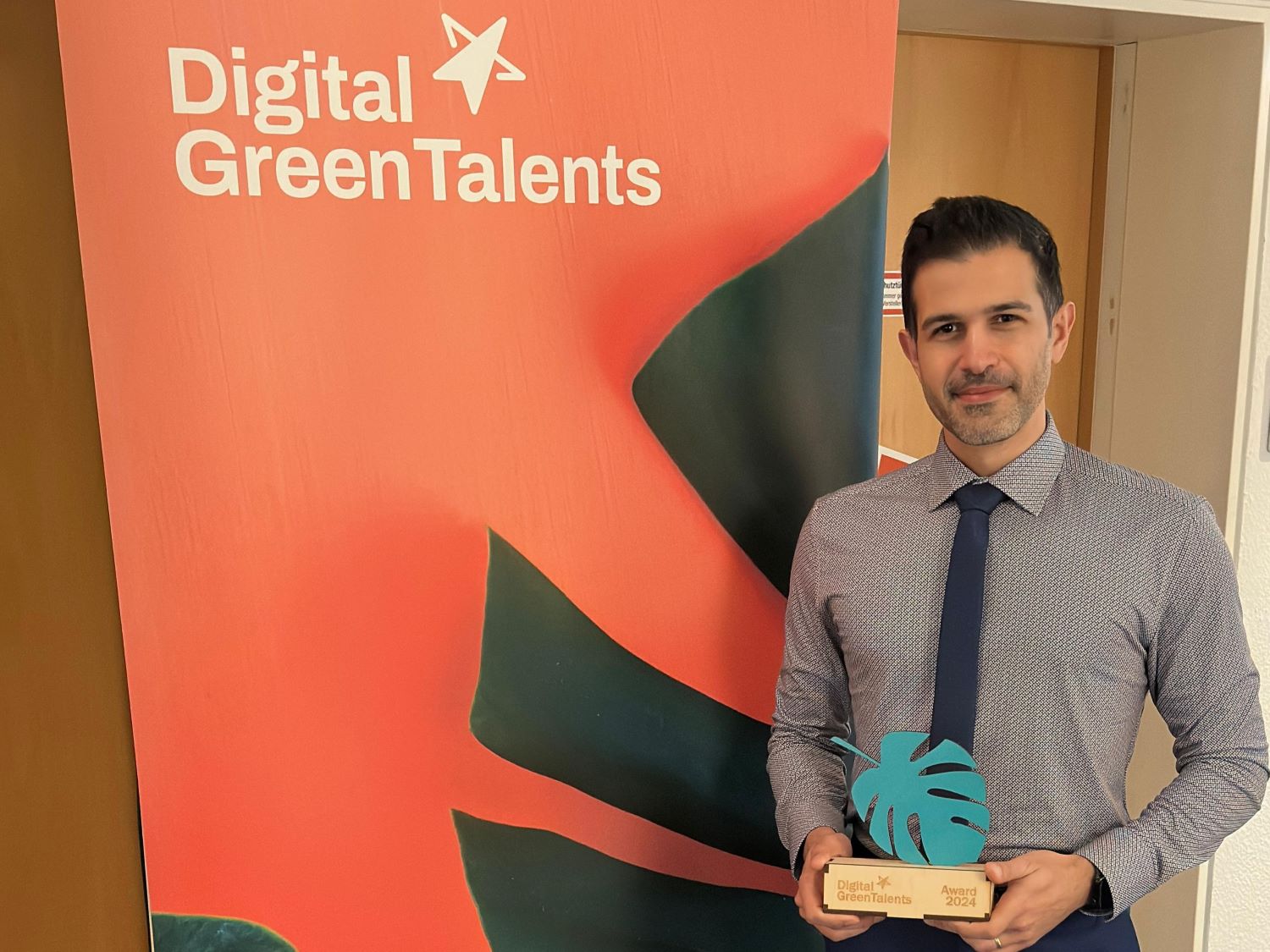
This work has led to another significant milestone for Forouzesh, and another opportunity to collaborate. A 2024 winner of the Digital Green Talents award, a German-government-sponsored international research award for leading thinking in sustainability and technology. Winners are invited to a spring school and award ceremony in May 2025, followed by a fully funded three-month “research stay,” where they can work in German facilities with German experts of the winner’s choosing.
“I know another colleague who previously won this award for research in photovoltaic systems,” Forouzesh says. “It was a great push for him to grow his network, work in a different field. With PhD studies, you can get intensely focused in a single area and not look around. This moves you outside your usual box and helps you recognize new challenges. And there are so many challenges in the world!”
Galvanized by the award win, Forouzesh is collaborating with Magna on planning the research stay for the best possible outcomes for him and his employer. The award, and research stay, is concurrent with recognition by Stanford/Elsevier as one of the world’s top 2% scientists for the fifth consecutive year, putting Forouzesh in rare company — and continuing to be a beacon in the power electronics community as an innovator and collaborator.